
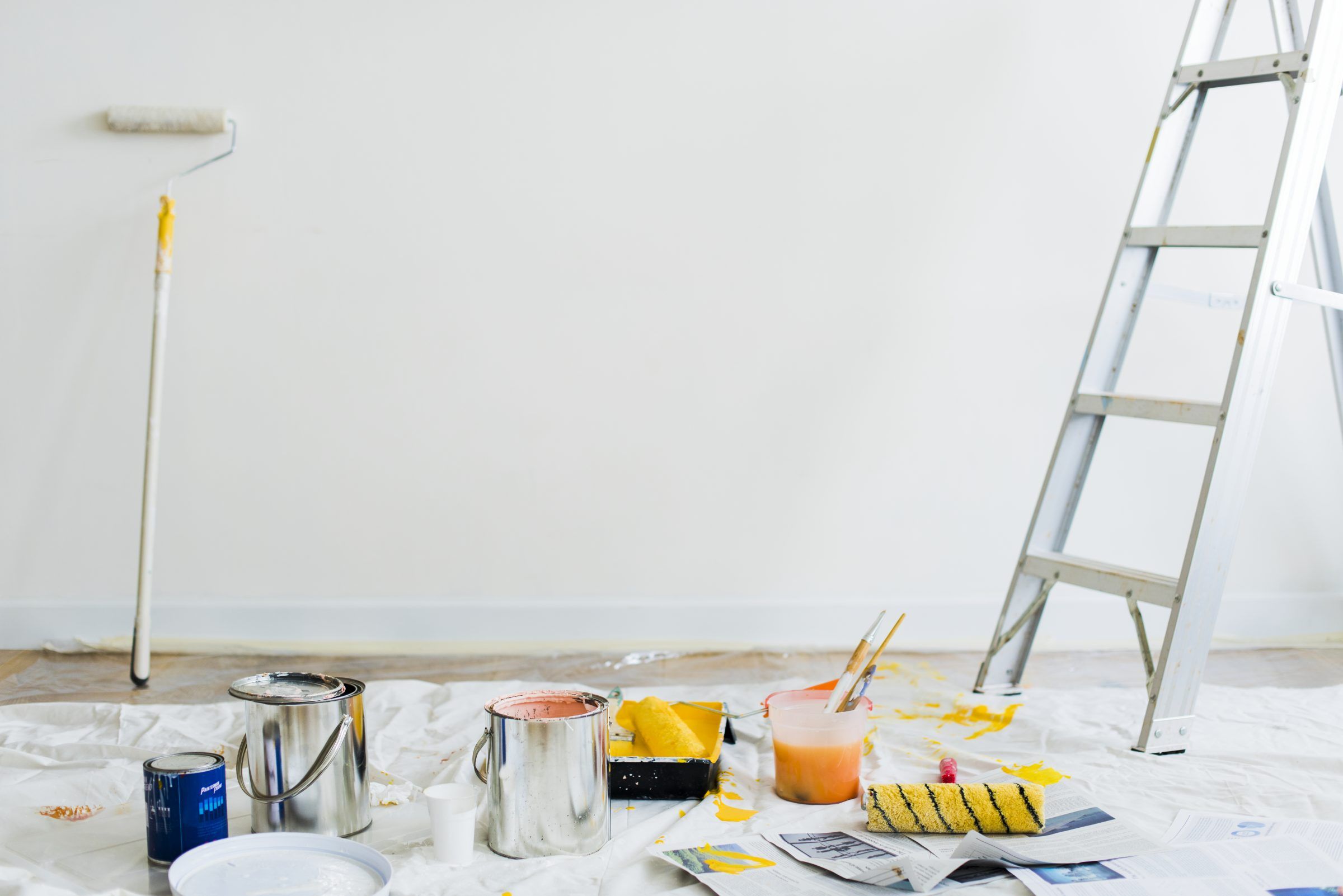
A quality paint job depends 80% on preparing the surface and the space itself. Skipping this step can cause the new paint to peel, dry in uneven patches, or stain your furniture and floors. Follow these simple steps to prepare the room correctly.
1. Clear and Protect the Space
Remove small items: Take out all decor, textiles, rugs, and lightweight furniture from the room.
Group large furniture: Move remaining heavy furniture to the center of the room and cover it with plastic drop cloths, securing the edges with painter's tape.
Protect the floor: Cover the floor with heavy-duty plastic sheeting, builder's paper, or old newspapers.
2. Remove Hardware and Protect Electrical Components
Remove faceplates: Disassemble the decorative wall plates from outlets and light switches.
Turn off the power: Shut off the electricity at the main breaker panel for safety.
Isolate outlets: Cover the outlets and switches with painter's tape. Also tape off baseboards, door frames, and ceiling moldings.
3. Prepare Wall Surfaces
Cleaning: Remove peeling old paint or wallpaper. Clean the walls of dust, dirt, and grease spots using a damp cloth and mild detergent.
Repair damage: Fill all cracks, dents, and nail holes with acrylic or spackling paste using a putty knife.
Sanding: Once the spackle is dry, sand any imperfections with fine-grit sandpaper until the surface is completely smooth. Wipe away any dust created.
4. Priming
Apply primer: Apply a layer of deep-penetrating primer using a paint roller.
Why it matters: Primer reduces paint consumption, improves adhesion to the wall, and ensures even drying without blotches.
Once the primer has dried completely (check the product label for drying times), the room is fully ready for the first coat of paint.